How to Organize Your Dissertation Sources
Most dissertation students don't start with an organization problem. They start with a few PDFs, a few books, and some notes.
Six months in, you have hundreds of sources, sticky notes everywhere, and a vague memory that you read the perfect quotation somewhere.
If this sounds familiar, you're not alone.
The goal of source organization is not to build a perfect system. The goal is to build a system that still works when your project contains hundreds of sources and you're writing under pressure.

Start with a Single, Authoritative Location
One of the most common mistakes researchers make is allowing sources to accumulate in multiple places.
Pick one place to serve as the home for your research library. Every source should pass through that location, whether it's a journal article, a book chapter, a photograph, an interview transcript, or an archival document.
The specific tool matters less than consistency. What matters is having one place you trust enough to become the authoritative record of your project.
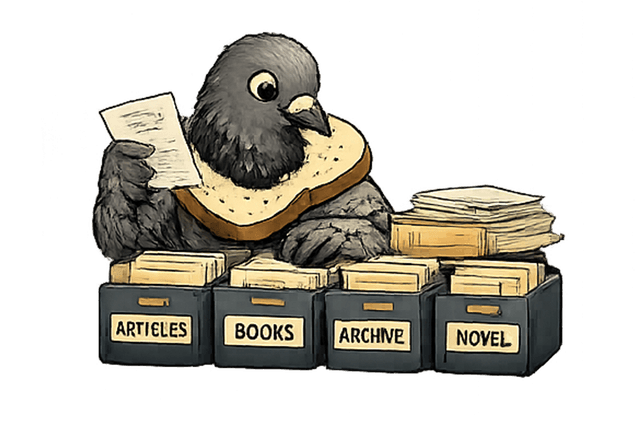
Separate Collecting from Understanding
When you're collecting material, focus on collecting. Add the source. Record basic info. Write a short note about why it seemed relevant. Then move on.
Set aside separate time for processing: read, annotate, write notes, and connect the source to the threads in your project.
Collection and analysis are different tasks. Treating them separately makes both easier.
The “I Know I Read This Somewhere” Problem
You remember the idea. You remember it was brilliant. But you have no idea where it came from.
This is one of the strongest arguments for keeping notes attached directly to sources.
Even a short note can be the breadcrumb that saves you months later.
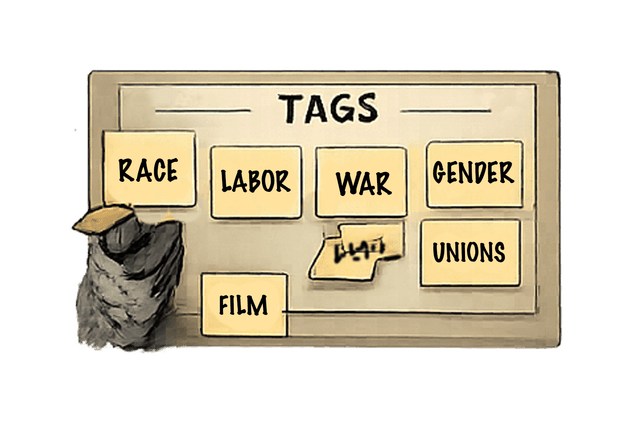
Use Tags for Questions, Not Just Categories
Most researchers organize by source type. Helpful, but not enough.
When you're writing, you search by questions and themes.
Tag sources with concepts, arguments, time periods, people, places — whatever matters to your project. A source can live in many conversations at once.
Write a Brief Note on Each Source
A citation tells you where a source is. A note tells you why it matters.
Even a single sentence can jog your memory months later.
Keep this note in the same place as the source itself. Future you will thank you.

Build Your Citation Format into the Workflow
Formatting citations at the end is painful.
Record the metadata you need (author, title, year, publisher, pages, archive info, DOI, etc.) when the source is in front of you.
It takes 30 seconds now. Not 30 minutes later.

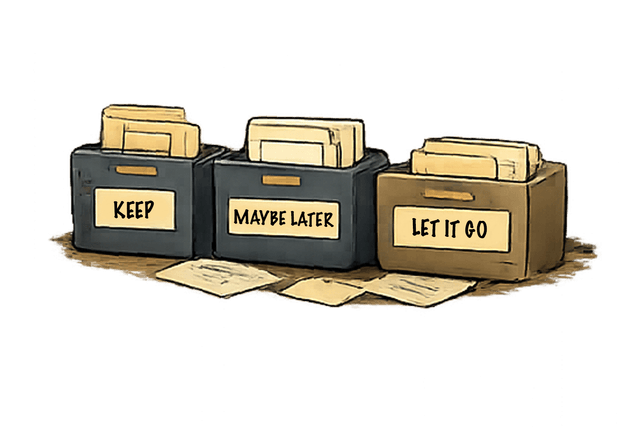
Review and Prune Periodically
A library that's never reviewed becomes an archive of “maybe” sources.
After a chapter draft, review:
- What did I use?
- What might I use later?
- What was I wrong about?
Pruning isn't wasted effort — it's a sign of a sharper argument.
Keep It Simple Enough That You'll Actually Use It
The best system is the one you maintain when life is busy and deadlines loom.
Start with the minimum:
- Find sources easily
- Group them thematically
- Attach a note
Add complexity only when you feel a real gap.


Built for Researchers, By Researchers
PigeonDB was built around these challenges. Rather than treating PDFs, citations, notes, tags, annotations, and chapter planning as separate activities, the goal is to keep them connected inside a single research workspace.
So you can spend less time hunting for sources, and more time building your argument.
PigeonDB · Organize everything. Find anything. Focus on your research.